Source: RAWG
Page Summary

Best Gaming PC for Half-Life 2: Deathmatch

This page recommends a balanced modern PC for Half-Life 2: Deathmatch that delivers consistent smoothness and responsive controls for casual online deathmatch and team play. The build prioritizes strong single-core CPU performance to keep physics simulations and networking stable while pairing it with a capable but not excessive GPU, avoiding the common mistake of over-investing in graphics for a 20-year-old engine.

Recommended Build: Balanced Deathmatch Build
Estimated Budget: $1,400.00
About this scenario

What matters for Half-Life 2: Deathmatch (General Gaming)

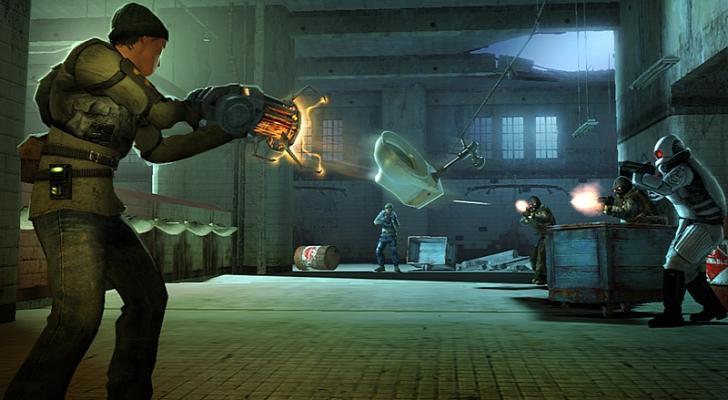
Half-Life 2: Deathmatch is a fast-paced arena multiplayer shooter built on the Source engine. Players spawn into compact maps and immediately start fighting with classic weapons like the crowbar, shotgun, and gravity gun, which turns everyday objects into deadly projectiles. Matches emphasize quick movement, bunnyhopping, and creative physics tricks rather than high-fidelity visuals or complex strategy. Most people play casual deathmatch or team deathmatch on low-population community servers, enjoying nostalgic chaotic sessions with instant respawns and small player counts. Because this is a legacy title from 2004 that has been updated with community patches, the performance demands are modest by today's standards. However, the physics simulations that power flying barrels, exploding props, and ragdoll effects create occasional spikes in CPU load, especially during frantic moments with multiple players and particle effects. The main player priorities are high responsiveness for precise aiming and movement, consistent frame delivery to avoid stutter when objects start flying, and low input lag so every flick and jump feels immediate. Visual settings barely affect the experience, yet many new builders mistakenly chase high-end GPUs for a game that runs fine on modest hardware. Common pain points include stuttering on unpatched installs or very old CPUs during busy fights, and the occasional feeling of sluggish controls when the system can't keep up with physics calculations. Before choosing a PC, understand that this scenario rewards balanced modern components focused on CPU performance and system responsiveness rather than raw graphical horsepower or excessive RAM.
Performance priority
CPU Responsiveness for Physics
Component focus
A modern Ryzen CPU with strong single-core speed is the most important part here because it directly improves physics object handling, movement responsiveness, and elimination of micro-stutters during chaotic multiplayer fights.
Recommended build

Balanced Deathmatch Build

CPU
AMD Ryzen 5 9600X 6-Core 12-Thread 3.9GHz AM5 65W CPU
GPU
XFX AMD Radeon RX 9060 XT OC Gaming Edition 16GB GDDR6
Cooler
Thermalright Peerless Assassin 120 SE ARGB CPU Air Cooler
Motherboard
ASUS Prime B650-PLUS WIFI Motherboard
RAM
Patriot Viper Elite 5 16GB DDR5-6000 RAM Kit
Storage
Kingston NV3 1TB M.2 2280 PCIe SSD
Case
Montech AIR 903 BASE E-ATX Mid Tower Case High Airflow
PSU
MSI MAG A650BN 650W 80+ Bronze ATX 3.1 PCIe 5.1 PSU
Why we chose it

Why this build makes sense

This build is designed as a sensible, future-proof system for Half-Life 2: Deathmatch that meets the game's low overall demands while ensuring excellent responsiveness for physics-driven combat. By selecting modern AM5 platform parts, it avoids the micro-stutters and input lag common on older hardware without wasting money on components the game cannot use. The overall logic accepts that visual fidelity offers almost no benefit in this title and instead allocates budget toward stability and quick system reactions during chaotic arena fights. The AMD Ryzen 5 9600X provides strong single-core performance that handles Source engine physics simulations and networking with ease, while the XFX Radeon RX 9060 XT 16GB offers far more graphics capability than needed and ensures the GPU never becomes a bottleneck even if you experiment with light mods or higher resolutions later. This CPU-heavy balance makes sense because the game leans more on processor work for object interactions than on the GPU, which remains lightly loaded in typical deathmatch scenarios. Completing the system with the ASUS Prime B650-PLUS WIFI motherboard, 16GB of fast DDR5 RAM, a reliable 1TB NV3 SSD, and efficient cooling creates a cohesive setup that boots quickly, loads maps instantly, and maintains consistent performance across long play sessions. The 650W power supply and airflow-focused case keep everything cool and quiet, so you can focus on mastering gravity gun tricks instead of worrying about hardware limitations.

Not sure if this build is right for you?

Every gamer is unique. Stop guessing and let our smart engine build a custom rig tailored exactly to your budget and the games you actually play.

Take the PCBuildQuiz!

A Note on Market Volatility

Our mission at PCBuildQuiz is to help you get maximum performance for every dollar by scanning for the best new retail prices 24/7. However, the hardware market can be unpredictable, and specific components like RAM or GPUs may experience temporary price spikes due to shortages. If a price seems unusually high, we recommend checking reputable used marketplaces or waiting for the volatility to settle because we would rather you save money than overpay for a brand new box.

Affiliate Disclaimer

Transparency is key. Some links on this page are affiliate links. This means if you click through and make a purchase, we may earn a small commission at no extra cost to you. This supports our servers and keeps our build engine free for everyone.