About this scenario
What matters for Horizon Zero Dawn
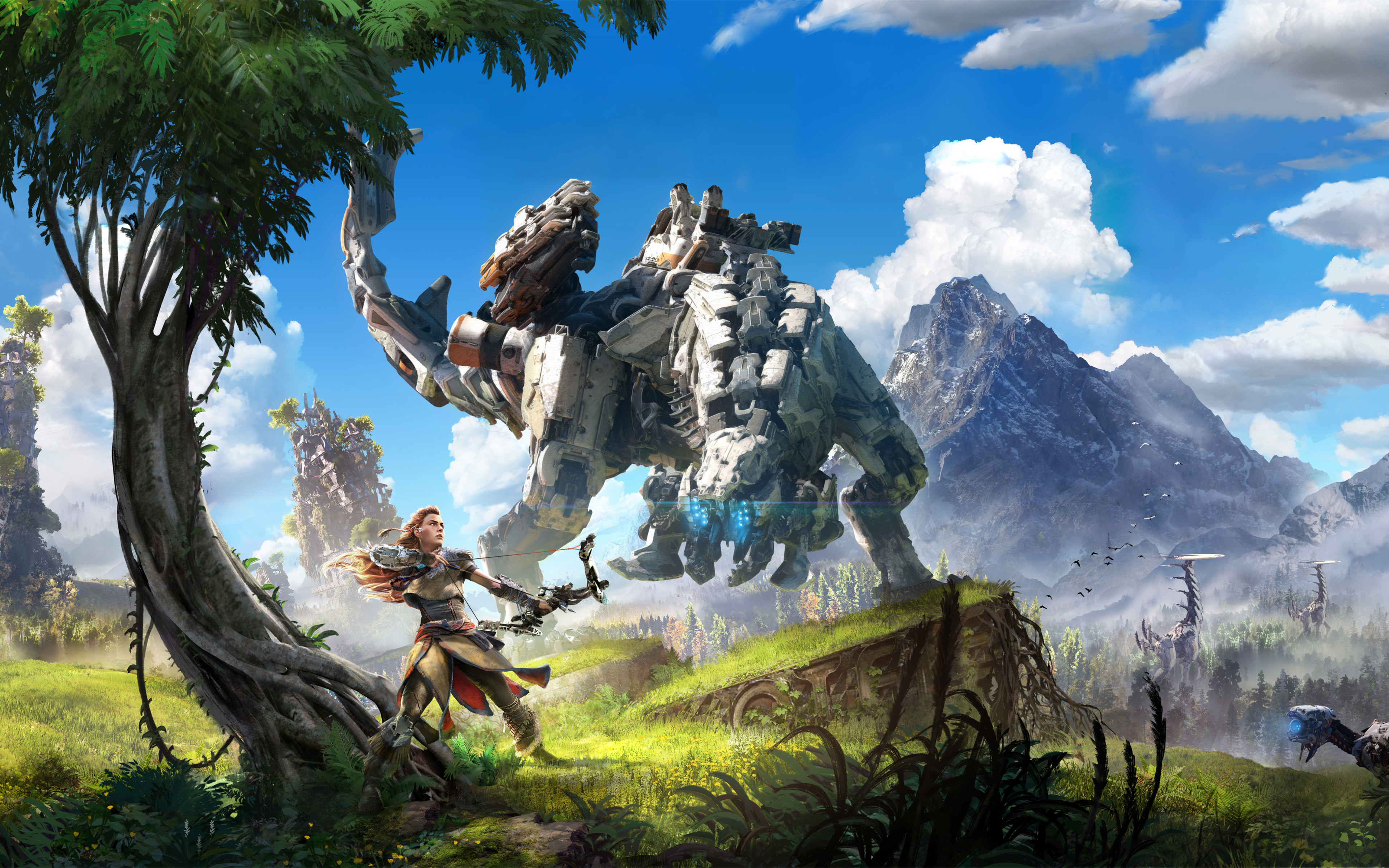
Horizon Zero Dawn is a single-player open-world action RPG set in a post-apocalyptic landscape filled with robotic machines. Players control Aloy, using a mix of tactical bow combat, traps, crafting, and melee to hunt machines while exploring diverse environments and uncovering a deep sci-fi story. Most players approach it casually, progressing at their own pace through main quests, side activities, and the Frozen Wilds expansion, often prioritizing immersion over speed.
The game’s performance demands come from its dense vegetation, intricate machine shaders, particle effects, and open-world streaming. These elements create high draw-call loads during traversal on mounts or in large battles, where stuttering or long load times quickly break the atmosphere. The Decima engine is GPU-heavy for visuals and VRAM-sensitive at higher texture and model settings, while the CPU handles world simulation and AI. Without an SSD, hitching during fast movement or area changes becomes a frequent frustration.
Common pain points include older GPUs struggling with shadow and foliage quality, insufficient VRAM causing texture pop-in, and mechanical HDDs introducing noticeable stutter that ruins precise aiming in combat. Many players also underestimate how much visual fidelity matters: the game’s appeal lies in its stunning landscapes and detailed machines, so a PC that maintains smooth frame rates while keeping high settings lets you fully appreciate the world without constant tweaking.
Before choosing hardware, understand that this is not a competitive title—stable, responsive play at high visual quality is the realistic goal. A sensible system focuses on a capable GPU, fast NVMe storage, and enough RAM to handle modern demands without overspending on CPU cores the game rarely fully utilizes.