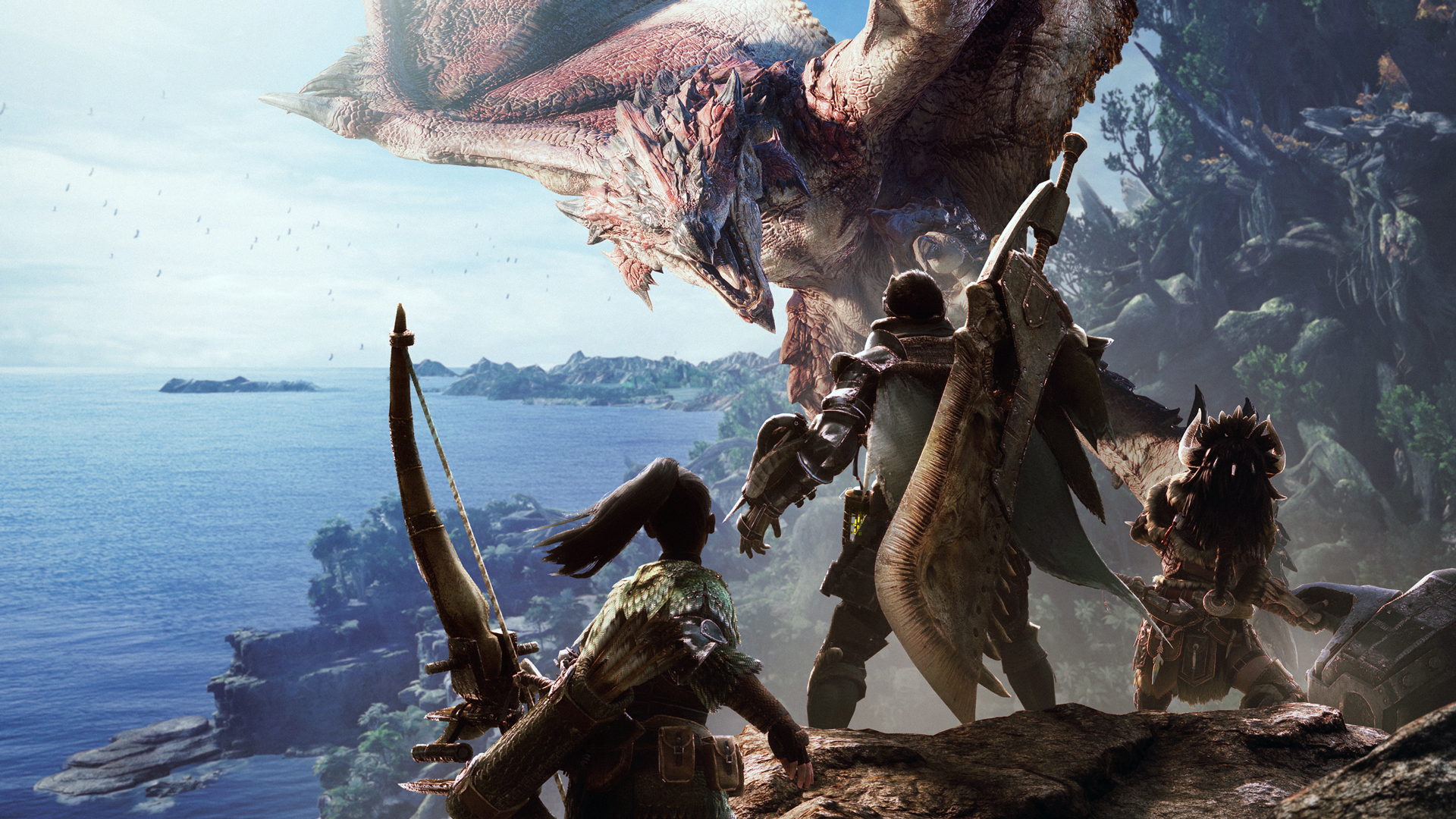
Source: RAWG
Page Summary

Best Gaming PC for Monster Hunter: World

This page recommends a balanced mid-range gaming PC built around a modern AMD CPU and NVIDIA GPU for Monster Hunter: World. The build prioritizes stable frame delivery and stutter-free gameplay in long hunts by addressing the game's dated multithreading and heavy particle effects. It delivers reliable performance for both solo play and four-player co-op sessions without overspending on extreme graphics hardware.

Recommended Build: Balanced Monster Hunter PC
Estimated Budget: $1,400.00
About this scenario

What matters for Monster Hunter: World (General)

Monster Hunter: World is an action role-playing game built around tracking and fighting massive creatures in living, interactive ecosystems. You spend most of your time in extended hunts across biomes such as the Ancient Forest or Hoarfrost Reach, gathering materials, crafting gear upgrades, and returning to the hub of Astera between quests. Most players engage in hundreds of hours of co-op multiplayer with friends or random hunters, often playing the Iceborne expansion that adds tougher monsters, heavier snow effects, and more particle-dense battles. The game’s practical performance demands center on consistency rather than maximum frame rates. Precise timing in combat requires smooth animation playback and responsive controls, while large open areas and dynamic monster interactions create sudden loads on the CPU. Poor multithreading in the MT Framework can cause noticeable hitching in crowded hubs or during heavy weather events, and initial world loading can feel sluggish without fast storage. Visual mods that improve textures or lighting further increase VRAM and GPU pressure over long sessions. Common pain points include stuttering when multiple large monsters appear on screen, frame-time spikes from volumetric fog and high-quality snow, and long load times that break the flow of grinding sessions. Many new builders mistakenly pair a strong GPU with a weak CPU, only to find the system still feels unresponsive during hunts. A sensible PC for this general scenario therefore needs a capable multi-core processor to keep the game stable, paired with a modern GPU that can deliver detailed visuals at comfortable resolutions while handling occasional modded loads.
Performance priority
Balanced System Stability
Component focus
The AMD Ryzen 5 7600X stands out as the most important part here because Monster Hunter: World’s MT Framework relies on strong multi-core performance to avoid CPU hitching in hubs, snowy zones, and during monster fights.
Recommended build

Balanced Monster Hunter PC

CPU
AMD Ryzen 5 7600X 6-Core 12-Thread 4.7GHz Socket AM5 105W Desktop Processor
GPU
ZOTAC Gaming RTX 5060 8GB GDDR7 OC
Cooler
Thermalright Peerless Assassin 120 SE ARGB CPU Air Cooler
Motherboard
ASUS Prime B650-PLUS WIFI Motherboard
RAM
Silicon Power XPOWER Storm RGB 32GB (2x16GB) DDR5-6000 CL36 XMP EXPO RAM Kit
Storage
Kingston NV3 1TB M.2 2280 PCIe SSD
Case
Montech AIR 903 BASE E-ATX Mid Tower Case High Airflow
PSU
MSI MAG A650BN 650W 80+ Bronze ATX 3.1 PCIe 5.1 PSU
Why we chose it

Why this build makes sense

This build is designed to deliver consistent, stutter-free performance across hundreds of hours of Monster Hunter: World by directly addressing the game’s CPU threading weaknesses and visual demands. It avoids the common mistake of over-investing in graphics power while leaving the processor undersized, instead creating balanced hardware that keeps animation timing reliable and world streaming smooth. The AMD Ryzen 5 7600X provides the strong multi-core performance needed to minimize hitching in Astera and during complex monster encounters, while the ZOTAC Gaming RTX 5060 8GB handles detailed environments, particle effects, and the occasional visual mod without strain. NVIDIA’s DLSS compatibility adds helpful image-quality options if you ever increase settings or resolution later. The 32GB of DDR5-6000 memory gives ample headroom for running the game alongside background tools or mods, and the Kingston NV3 1TB NVMe SSD dramatically reduces load times between hunts compared to slower storage. Supporting parts are chosen for practicality within a sensible budget. The ASUS Prime B650-PLUS WIFI motherboard offers reliable AM5 platform features and future upgrade room, the Thermalright Peerless Assassin cooler keeps the 7600X quiet during long play sessions, and the Montech AIR 903 case provides excellent airflow to both the CPU and GPU. The 650W MSI PSU supplies stable power with headroom for minor upgrades. Overall, the configuration prioritizes the exact stability and responsiveness players need for enjoyable grinding and co-op hunts rather than chasing maximum settings or ray tracing that this game does not heavily rely on.

Not sure if this build is right for you?

Every gamer is unique. Stop guessing and let our smart engine build a custom rig tailored exactly to your budget and the games you actually play.

Take the PCBuildQuiz!

A Note on Market Volatility

Our mission at PCBuildQuiz is to help you get maximum performance for every dollar by scanning for the best new retail prices 24/7. However, the hardware market can be unpredictable, and specific components like RAM or GPUs may experience temporary price spikes due to shortages. If a price seems unusually high, we recommend checking reputable used marketplaces or waiting for the volatility to settle because we would rather you save money than overpay for a brand new box.

Affiliate Disclaimer

Transparency is key. Some links on this page are affiliate links. This means if you click through and make a purchase, we may earn a small commission at no extra cost to you. This supports our servers and keeps our build engine free for everyone.