About this scenario
What matters for Rocket League
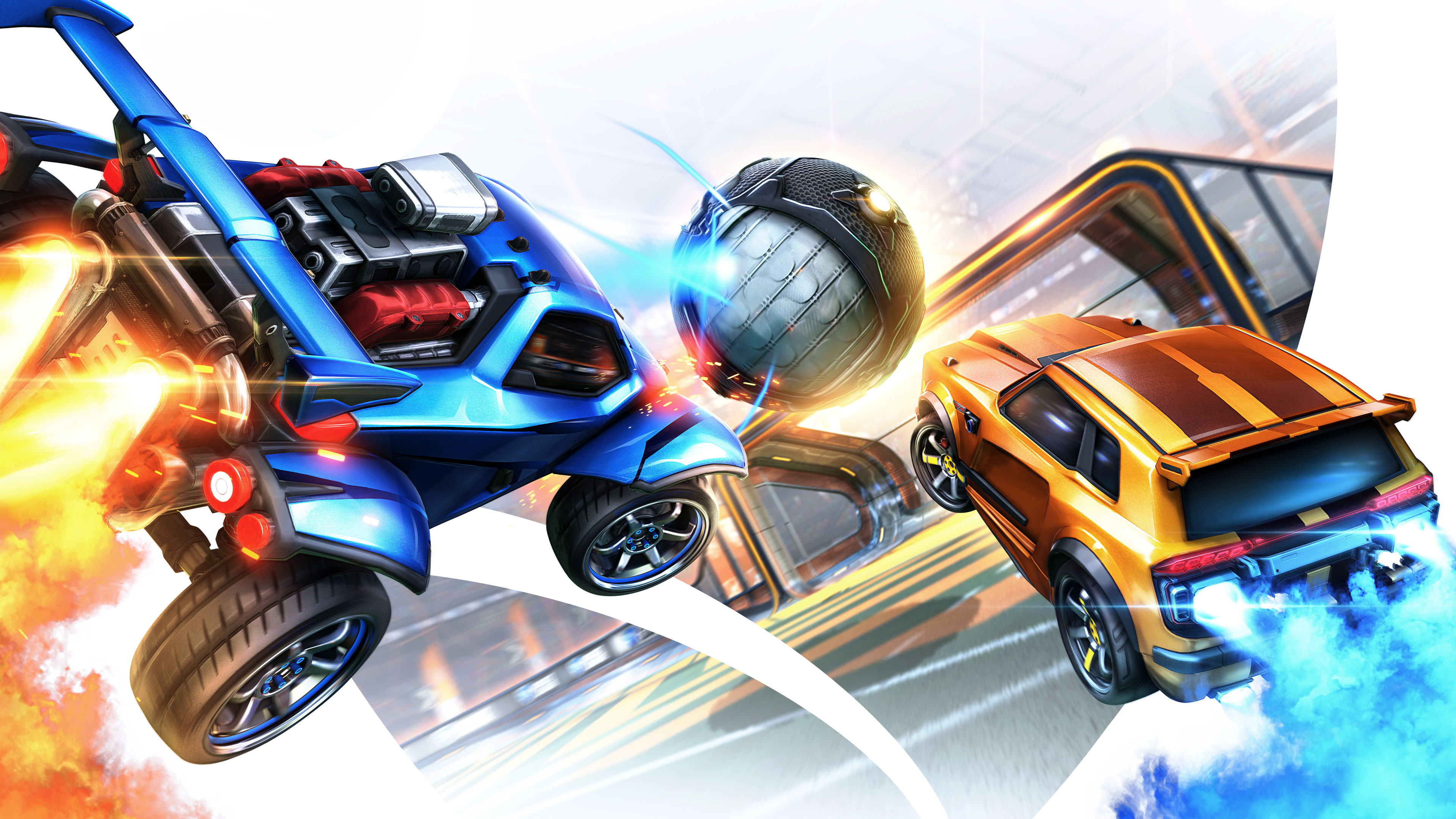
Rocket League combines vehicular action with soccer in fast-paced, physics-driven arenas where players control rocket-powered cars to hit a giant ball into goals. Matches typically last around five minutes in online ranked 2v2 or 3v3 playlists, with sudden-death overtime, cross-platform play, and extra modes like Rumble or Hoops keeping sessions short and replayable. On PC the game runs on a modified Unreal Engine 3 codebase that remains exceptionally well optimized even years after its 2015 launch, now free-to-play on the Epic Games Store with ongoing seasons, Rocket Pass rewards, and regular events.
Most players experience the game through competitive ladders or casual queues, where split-second timing for aerial maneuvers, flip resets, and boost management determines wins. Performance matters because input lag or stuttering directly impacts mechanical skill execution and team coordination. The primary load drivers are CPU-heavy physics calculations for every car, ball, and boost interaction, plus particle effects and shadows during crowded goal-line scrambles. Visual settings have surprisingly little impact on core gameplay, which is why many competitive players prioritize frame consistency and responsiveness over high-fidelity graphics.
Common pain points include stuttering during goal explosions or when multiple boost trails and particle systems activate simultaneously, as well as occasional CPU-related hitches if the processor struggles with the simulation demands. A frequent hardware mistake is pairing a weak CPU with an overkill GPU, expecting graphical upgrades to improve the competitive feel. Before choosing a PC, understand that Rocket League rewards stable high frame rates and low input latency far more than 4K textures or ray tracing—settings that add load without meaningful benefit to ranked play.