About this scenario
What matters for Team Fortress 2
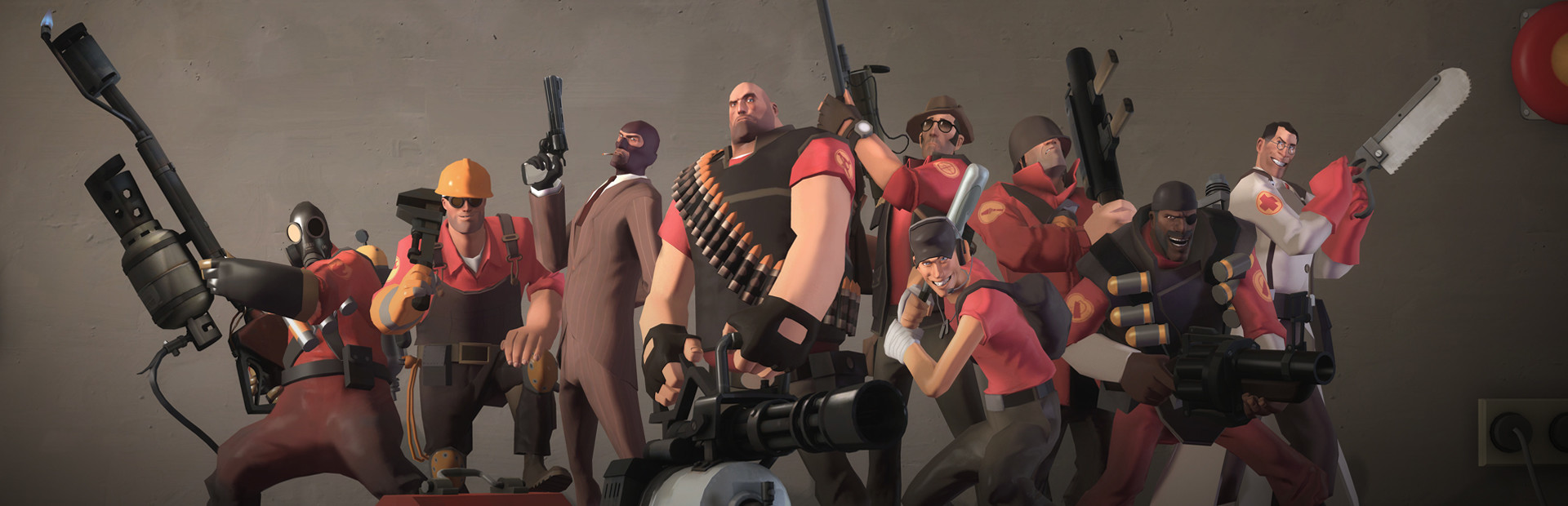
Team Fortress 2 remains one of the most played free-to-play multiplayer first-person shooters more than 15 years after launch. Players pick from nine distinct classes with unique playstyles, weapons, and abilities, then join RED or BLU teams in objective-based modes such as Payload, Control Points, and Capture the Flag. Most players jump into casual 12v12 public servers for relaxed, meme-filled chaos complete with hats and unusual weapons, while others pursue structured 6v6 competitive matchmaking or community leagues that demand sharper movement and quicker reactions.
Because the stylized Source Engine graphics place very little demand on the GPU, the real performance load comes from the CPU. In busy matches the processor must simulate dozens of character positions, calculate rocket jumps and sticky bomb trajectories, process ragdoll physics after every kill, and render cosmetic particles from multiple players at once. This creates frequent frame-time spikes when the screen fills with explosions, buildings, and cosmetic effects. Common pain points include stuttering during mid-fight chaos or when too many unusual hats and taunts are visible, even on hardware that looks sufficient on paper. Many builders also mistakenly pour money into high-end GPUs that stay mostly idle while the CPU becomes the clear limit.
Before choosing parts it helps to understand that smoothness and responsiveness matter far more than maximum visual settings. Consistent frame delivery improves hit registration, movement accuracy, and overall feel in both casual pubs and serious matches. Mods, custom HUDs, and cosmetic hiders are popular precisely because they reduce CPU load, showing how tightly this game's performance ties to processor capability rather than graphics horsepower.