About this scenario
What matters for Tom Clancy's Rainbow Six Siege
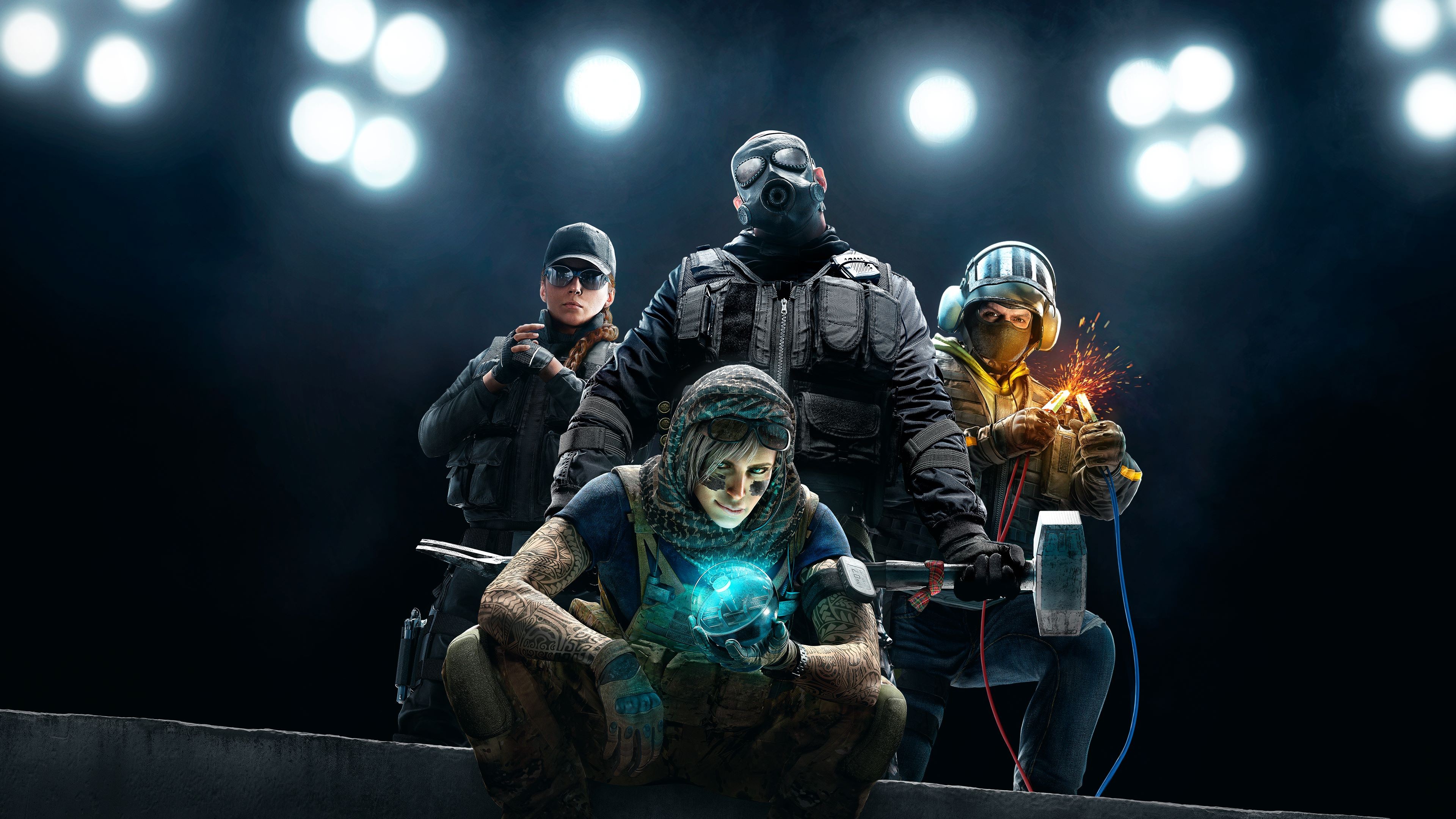
Tom Clancy's Rainbow Six Siege is a competitive 5v5 tactical shooter built on fully destructible environments where every wall, floor, and barricade can be breached or reinforced. Players choose from a large roster of unique operators, each with specialized gadgets and abilities, making strategy and team coordination just as critical as aim. Rounds are short—often decided in seconds—and the game rewards precise positioning, fast reactions, and situational awareness over reckless aggression. Under the hood, Siege's AnvilNext 2.0 engine handles complex tasks simultaneously: real-time destruction physics send debris calculations to the CPU, multiplayer networking demands fast single-thread performance to keep player actions synced, and visual features like reflections and ambient occlusion shift load toward the GPU. This split workload is why a well-balanced gaming PC matters more than one overloaded component. The game has evolved significantly since its 2015 launch, with years of operator additions, map reworks, and engine updates like those in Siege X that have gradually increased hardware demands. Newer players often wonder what to prioritize in a PC build, and the research is clear: a capable modern CPU prevents the stutters that plague firefights, while an SSD eliminates the long load times that a hard drive causes. Running the game at reasonable visual settings with a stable frame rate is far more important than maxing out every slider, especially if you want a responsive experience on a standard monitor.
Performance priority
Consistent smoothness in multiplayer without overbuying the wrong components
Component focus
A fast six-core processor handles Siege's CPU-heavy networking, physics, and destruction calculations, while a mid-range GPU keeps frame rates stable without pushing into diminishing returns. An NVMe SSD and 16GB of DDR5 round out the build to prevent background hitches from interrupting gameplay.