About this scenario
What matters for Sea of Thieves
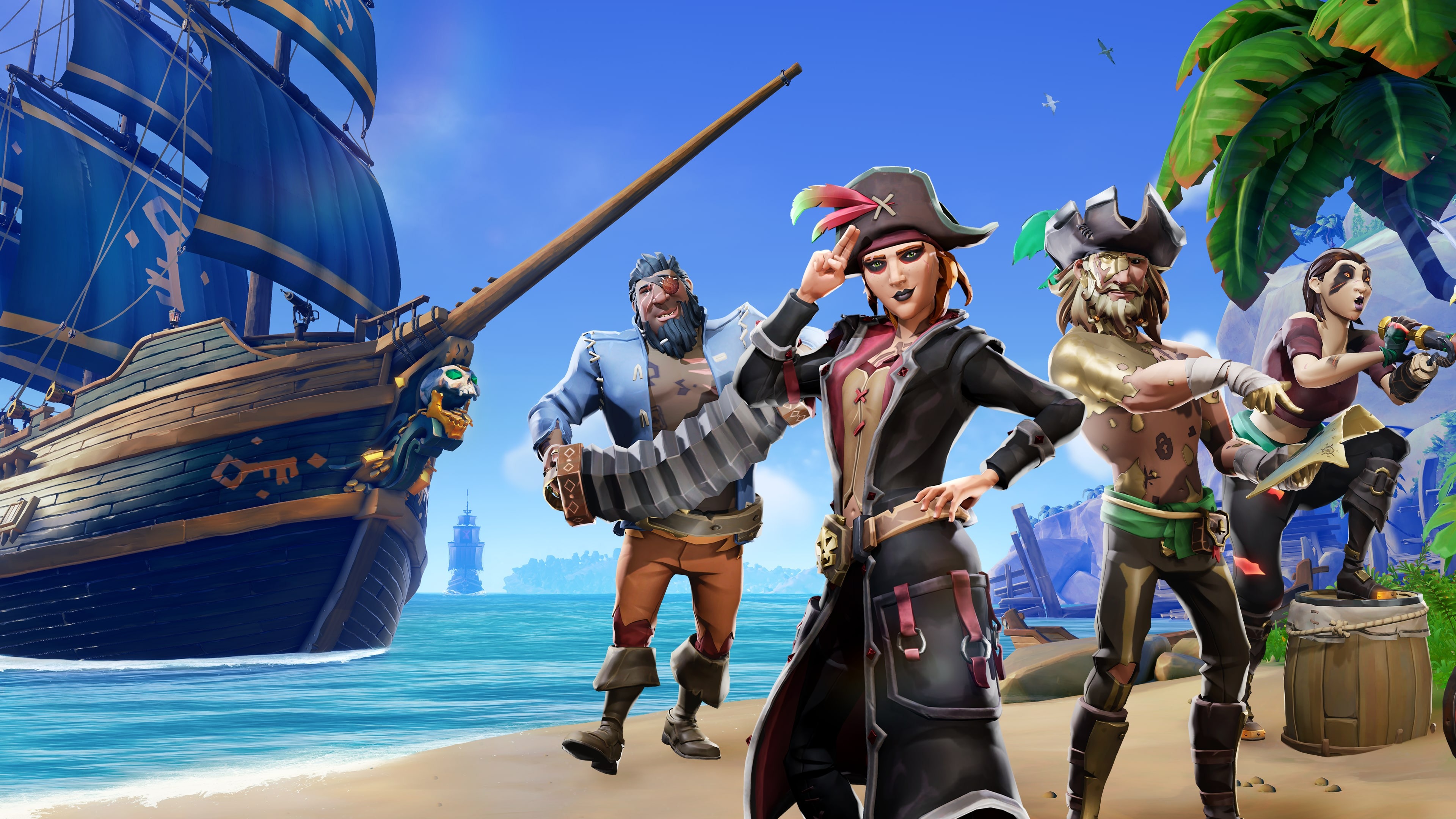
Sea of Thieves is a shared-world multiplayer pirate sandbox built on Unreal Engine 4 where players sail ships across procedurally generated seas, hunt treasure for trading companies, battle skeleton hordes and rival crews, and participate in seasonal events. Most players experience it in crews of 1–4 on High Seas servers, mixing relaxed exploration with sudden high-stakes PvP ship fights and island skirmishes. The game’s live-service nature means constant updates introduce new voyages, Faction Battles, and player-dense moments that test hardware in unpredictable ways.
In competitive high-FPS play, the focus shifts from raw visual fidelity to maintaining smooth, responsive motion and minimal latency. Ship handling, precise cannon aiming, sword swings, and quick camera turns all benefit from high frame rates that keep input feeling immediate. The biggest performance loads come from asset streaming when approaching islands, multiplayer synchronization when multiple ships converge, particle effects during cannon barrages, and CPU-driven simulation of AI enemies and world events. These create common pain points: texture pop-in and stuttering on island approach, frame-time spikes in busy player areas, and inconsistent smoothness when the CPU struggles to feed the GPU at high refresh rates.
Many players underestimate the CPU and storage demands because the stylized art style does not look particularly demanding on paper. Yet traversal hitches and simulation bottlenecks become very noticeable once you prioritize competitive responsiveness over graphics settings. A sensible high-FPS PC for Sea of Thieves therefore emphasizes strong multi-core performance, rapid storage to feed the engine continuously, and enough GPU power to sustain high frame rates without becoming the limiter in most scenarios.